Introduction
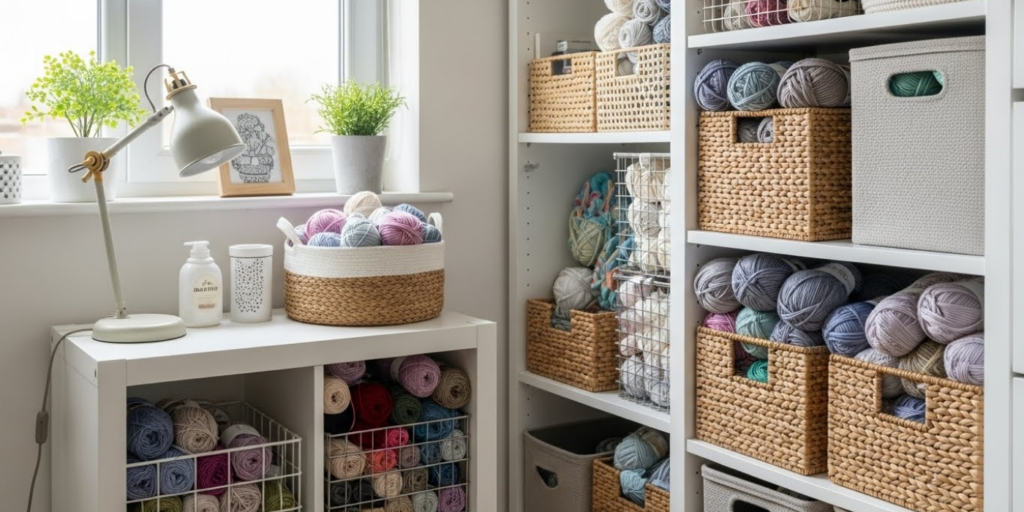
If you’ve ever tripped over a rogue skein of merino wool in your hallway or opened a closet only to be buried under a rainbow avalanche of yarn, you’re not alone. For crocheters, knitters, and fiber artists, yarn isn’t just a material—it’s inspiration, comfort, and sometimes, a full-blown obsession. But when your living space is compact (think studio apartments, tiny homes, or shared bedrooms), keeping your stash tidy can feel like an impossible puzzle.
The good news? You don’t need a walk-in craft room to stay organized. With a little creativity and smart planning, even the smallest nook can become a functional, beautiful yarn haven. In this article, we’ll explore practical, space-savvy storage ideas tailored for fiber lovers with limited square footage. From vertical solutions to multi-use furniture, you’ll discover how to protect your yarn from dust and pests, keep colors and weights sorted, and—most importantly—still enjoy the joy of browsing your collection without chaos.
Whether you’re working with 200 square feet or just a corner of your bedroom, these strategies will help you reclaim your space while honoring your craft. Let’s unravel the tangles and find storage that works as hard as you do.
1. Why Yarn Storage in Small Spaces Is More Than Just Aesthetic
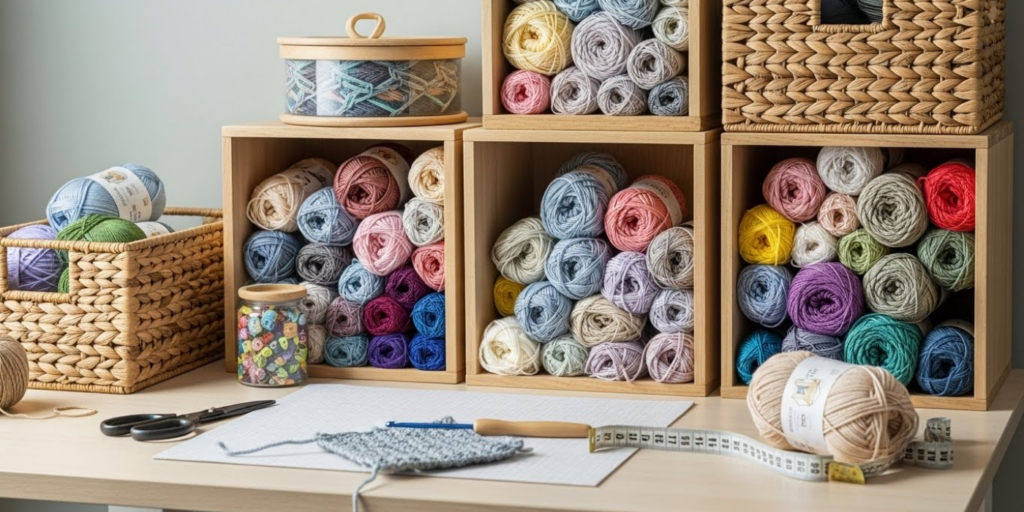
Let’s be real: yarn storage isn’t just about making your Instagram feed look cute (though that’s a nice bonus). In small spaces, poor organization can quickly lead to real problems—lost skeins, tangled hanks, moth damage, or even mildew in humid climates.
According to a 2024 survey by the Handmade Industry Alliance, 62% of fiber artists living in urban apartments reported losing or damaging yarn due to improper storage—often because it was stuffed into dark, unventilated bins or left exposed to sunlight and dust. Yarn is a natural fiber, and many types (like wool, alpaca, and cotton) are sensitive to moisture, heat, and pests. Without proper airflow and protection, your precious stash can degrade faster than you can say “frog it.”
Moreover, disorganization kills creativity. When you can’t find that perfect shade of sage green for your current project, momentum stalls. But when your yarn is visible, sorted, and accessible? Inspiration flows effortlessly.
That’s why smart storage in small spaces isn’t optional—it’s essential. The goal isn’t to hide your yarn away, but to display it thoughtfully while protecting it. Think of your stash like a library: every book (or skein) has its place, and you can find what you need in seconds.
Key principle: Prioritize accessibility, protection, and flexibility—not just minimalism.
2. Think Vertical: Maximize Wall and Door Space
When floor space is at a premium, go up, not out. Walls and doors are your secret weapons for yarn storage—and they’re often overlooked.
Start with floating shelves. Install a few in a closet, above your desk, or along an empty wall. Use matching baskets or clear bins on each shelf to group yarn by weight (fingering, worsted, bulky) or project type. Bonus: this keeps your yarn visible while preventing dust buildup.
Another brilliant option? Over-the-door organizers. Originally designed for shoes, these fabric pockets work perfectly for smaller yarn cakes, mini skeins, or notions like stitch markers and tapestry needles. Hang one on the back of your craft closet or bedroom door—it takes zero floor space and holds up to 20 small items.
For a more custom look, consider a pegboard system (like IKEA’s SKÅDIS). Paint it your favorite color, add hooks and bins, and create a modular wall that evolves with your stash. You can hang yarn cakes directly on hooks, store wound balls in mesh pouches, or clip patterns to the board with binder clips.
Pro tip: Use tension rods inside a closet to create horizontal “shelves” for rolled skeins. Simply place the rod between two walls, and drape yarn over it like a boutique display. It’s cheap, removable, and surprisingly effective.
3. Furniture That Doubles as Yarn Storage
In a small apartment, every piece of furniture must earn its keep. That means choosing items that serve more than one purpose—especially when it comes to yarn.
Look for ottomans with hidden storage. Not only do they double as seating or footrests, but many lift open to reveal deep compartments perfect for bulky yarn or WIPs (works in progress). Line the inside with fabric or felt to prevent snagging.
Nesting side tables or storage benches are equally smart. Keep one near your favorite armchair for current projects, and stash extra skeins underneath. Some even come with built-in trays for scissors, hooks, and pattern books.
Don’t sleep on under-bed storage. Low-profile rolling bins (like those from The Container Store or IKEA) slide easily beneath most beds and can hold dozens of skeins. Choose clear bins so you can see contents at a glance, or label opaque ones with removable stickers for seasonal rotation.
Another clever hack? Repurpose a vintage dresser. Even a narrow two-drawer unit can become a yarn command center. Use drawer dividers to separate by fiber type (wool, cotton, acrylic) or color family. Add felt liners to protect delicate skeins from wooden splinters.
Real-life example: Maria, a Brooklyn-based crocheter living in a 400-square-foot studio, converted an old TV stand into her yarn hub. She removed the doors, added removable bins inside, and mounted a small pegboard above it for tools. “Now my stash feels intentional—not chaotic,” she says.
4. Smart Bins, Labels, and Rotation Systems
Even the most beautiful storage fails if you can’t find what you need. That’s where smart categorization comes in.
Start by sorting your yarn into broad categories:
- By project (e.g., “sock yarn,” “blanket stash,” “gifts in progress”)
- By weight (lace, fingering, DK, worsted, bulky)
- By fiber (wool, cotton, bamboo, acrylic blends)
- By color family (neutrals, brights, pastels)
Then, choose containers that support your system. Clear, stackable bins (like IRIS or Sterilite) are affordable, space-efficient, and let you see contents instantly. For a cozier look, use woven seagrass or fabric bins—but always label them.
Labeling doesn’t have to be fancy. A chalkboard sticker, a washi tape tag, or a small laminated card works perfectly. Just include enough info to jog your memory: “Worsted – Wool – Mustard to Navy.”
Also, adopt a “first in, first out” rotation for yarn you plan to use soon. Keep frequently used skeins at eye level or in easy-reach bins; store seasonal or specialty yarns (like holiday-themed or luxury fibers) on higher shelves or in under-bed storage.
Don’t forget environmental care! Store yarn away from direct sunlight (which fades colors) and damp areas (like basements). If moths are a concern, tuck in natural repellents like cedar blocks or lavender sachets—never use mothballs near yarn you’ll wear!
5. Embrace Minimalism Without Losing Joy
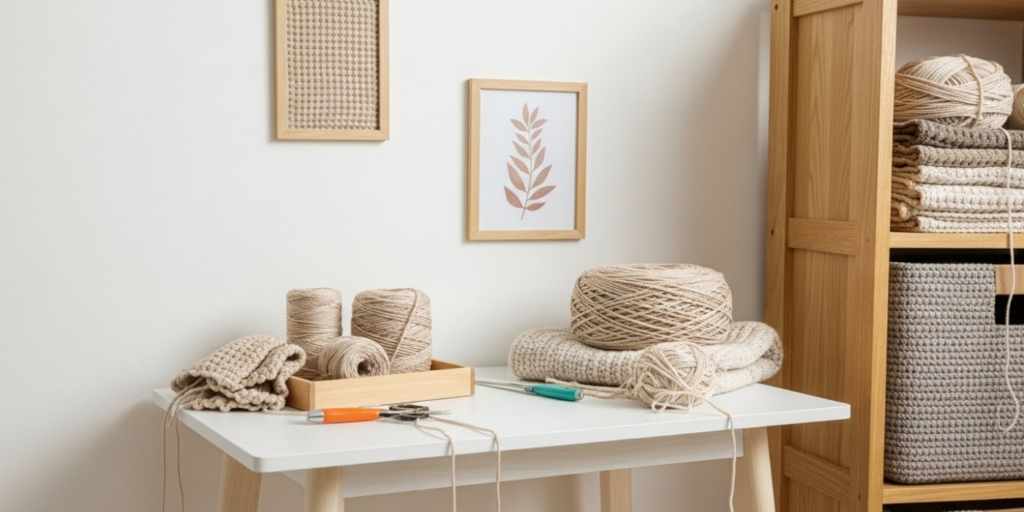
Here’s a gentle truth: you don’t need to keep every single skein. In small spaces, curation is kindness—to your home and your creativity.
Regularly audit your stash. Ask yourself:
- Have I used this yarn in the past 18 months?
- Does it spark joy or inspiration?
- Is it damaged, faded, or matted?
If the answer is “no,” consider gifting it to a local school, donating to a charity knitting group, or trading with fellow crafters online. Many yarn communities host “stash swaps” where you can exchange unused skeins—freeing up space while gaining something new.
This isn’t about deprivation; it’s about making room for what truly matters. When your stash reflects your current style and projects, decision fatigue drops, and creativity soars.
Plus, a smaller, well-organized stash is easier to photograph, inventory, and even insure if you sell your work. Think of it as editing a novel: cutting filler makes the story stronger.
Remember: Your space should support your craft—not suffocate it. A tidy, intentional yarn corner can be just as inspiring as a sprawling studio.
Conclusion
Living in a small space doesn’t mean you have to compromise on your love for yarn. With vertical storage, multi-functional furniture, smart labeling, and a little mindful curation, you can create a yarn storage system that’s both practical and full of personality. The key is to work with your space—not against it—using every inch wisely while keeping your materials protected and accessible.
Your yarn stash is more than thread; it’s your creative potential waiting to be unraveled. By organizing it thoughtfully, you’re not just tidying up—you’re making room for your next masterpiece.
So take a deep breath, grab a few bins, and start small. Maybe today you install one shelf. Tomorrow, you sort by color. Before you know it, you’ll have a system that feels calm, inspiring, and uniquely yours.
Now we’d love to hear from you! What’s your biggest yarn storage challenge in a small space? Have you tried any of these solutions—or invented your own? Share your tips, photos, or “aha!” moments in the comments below. Let’s help each other stitch smarter, not harder! 🧶✨

Daniele Ferreira is passionate about the world of crochet, dedicating her time to exploring techniques, creating unique pieces, and sharing her knowledge with beginners and aficionados alike. With attention to detail and creativity, she transforms yarn into true works of art, inspiring others to discover the beauty and joy of this manual art.